


I've seen many companies grow with more leads but sell less. It sounds strange. But it's not. When the team receives many contacts and doesn't know who has a better chance of buying, the funnel loses momentum. This is where lead scoring comes in.
Lead scoring is the practice of assigning scores to leads based on profile, interest, and behavior. The question for 2026 is straightforward: is it better to stick with the manual model or move to automatic?
For 2026, I consider automatic lead scoring the best choice for companies that want to respond quickly, qualify better, and scale without losing consistency.
This doesn't mean the manual method is dead. I still see value in it for smaller operations or in initial phases. But when volume increases and the journey becomes more fragmented across channels, the manual approach starts to fail. And it fails silently.
What Changes in 2026
In recent years, I've noticed a clear shift in lead behavior. They arrive via WhatsApp, forms, direct messages, chat, and even ads with messages. They want an immediate response. If it takes too long, they move on to another option.
Speed has become a purchasing criterion.
This affects scoring. In the old model, someone on the team would define rules, update spreadsheets, and adjust weights based on commercial perception. It works for a while. Then, the process becomes slow, subjective, and difficult to maintain.
In 2026, I expect an even more real-time, data-driven scenario. That's why automatic systems are gaining ground. Platforms like Lead2Go make sense in this context because they combine immediate response, AI-driven qualification, and continuous monitoring of lead behavior on the channel they prefer to use.
How Manual Lead Scoring Works in Practice
In the manual model, the company creates criteria and assigns points. For example, a management role might be worth more points, visiting the pricing page adds others, and requesting a demo weighs even more.
In my experience, it usually follows three steps:
Definition of the ideal customer profile.
Creation of weights for actions and characteristics.
Periodic review based on feedback from the sales team.
This method has advantages. It's simpler to start, requires less infrastructure, and helps the company understand its own funnel. For businesses with few leads per month, it can work well.
But I've seen the problem appear quickly. The rules become outdated. Audience behavior changes. The team forgets to review. And the lead's score no longer reflects the real chance of sale.
The biggest risk of manual lead scoring is relying too much on assumptions and human time for something that changes constantly.
Where Automatic Gains Strength
In automatic scoring, the score is calculated by systems that cross-reference profile and behavior signals without constant manual updates. This reduces delays, errors, and variations between analysts.
I like this model because it learns from more volume and responds better to high-speed contexts. If a lead interacts outside business hours, asks for pricing details, and shows clear intent, their score can increase instantly. This changes the service priority order.
For those working with message-based conversations, this gain is even greater. Lead2Go, for example, operates 24 hours a day, conducts natural conversations, qualifies automatically, and can hand over to a human when necessary. It's not just a score. It's a score with immediate action.
If your team still struggles with delays in the first contact, I also suggest this content on how to improve lead response time. I see a direct link between speed and qualification quality.
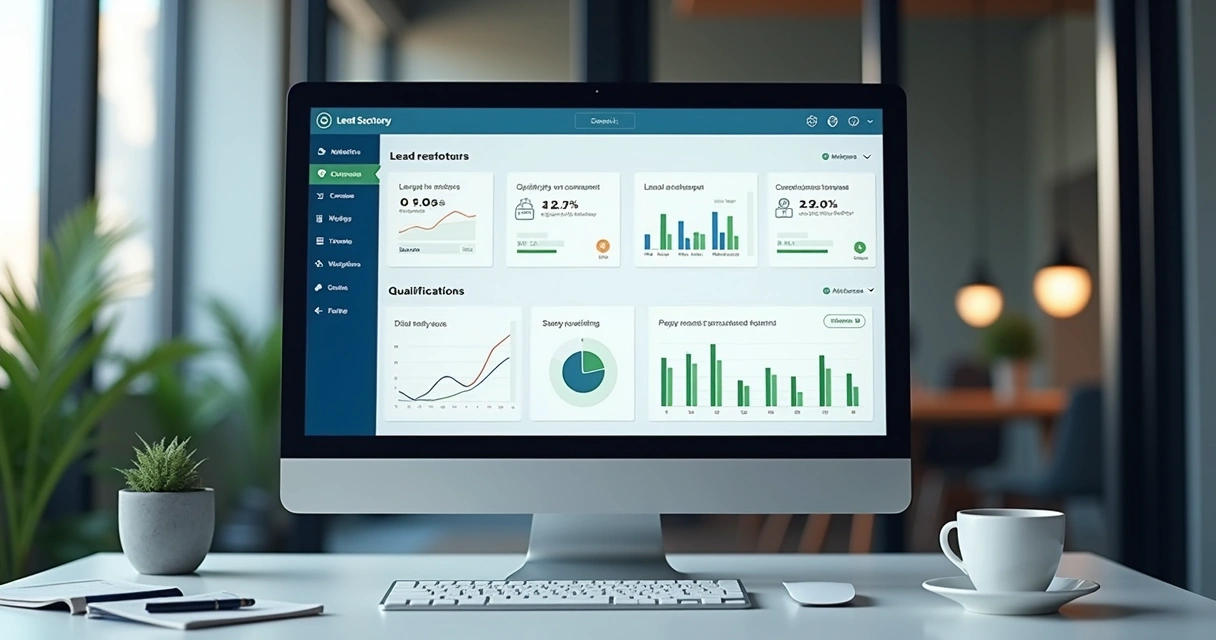
Manual or Automatic: What to Compare?
When I compare the two models, I don't just look at initial cost. I observe the real commercial impact. Some points greatly help in this decision:
Speed in classifying new leads.
Capacity to handle high volume.
Ease of adjusting criteria.
Integration with CRM, WhatsApp, and customer service.
Clarity of reports for marketing and sales.
With manual scoring, the entry is usually lighter. With automatic scoring, the return tends to be higher when the company needs to grow without proportionally expanding the team.
I also pay attention to the lead's transition between automation and human support. Some tools on the market handle isolated parts of the process. But this creates context breaks. Lead2Go's advantage lies in connecting response, qualification, prioritization, and transfer within the same flow, with full visibility of what happened.
If you want to better understand the data side, it's worth reading this material on what to analyze in lead qualification reports. I consider this point decisive for correcting criteria and selling more.
When Manual Still Makes Sense
Not every company needs to automate everything at once. I don't like generic answers. There are cases where manual scoring is still a good entry point.
I see more adherence when the operation has these characteristics:
Low monthly lead volume.
Short and simple sales process.
Small team very close to contacts.
Initial phase of ideal profile definition.
In these scenarios, the manual method helps in learning. However, I recommend treating it as a stage, not the final destination. If the company grows, maintaining this model for too long can hinder response and prioritization.
How I See the Best Choice for 2026
If I had to decide today for a company that receives leads via message, I would choose automatic. The reason is simple. The 2026 lead wants fast, personalized, and non-repetitive conversations. And the sales team needs to receive more prepared opportunities.
The best method for 2026 is automatic, with clear rules, behavior analysis, and direct connection to customer service.
This is even more true for operations that use WhatsApp. If this is your case, I recommend this practical guide to integrating AI into WhatsApp support. I've seen this channel become the main source of sales, provided the qualification keeps up with the conversation speed.

For those looking for more references on sales and applied AI, I suggest following the content in the sales category and also the artificial intelligence section. I like these topics because they show how technology can support sales without taking control away from the team.
Conclusion
In my view, the competition between manual and automatic lead scoring in 2026 already has a winner in most cases. Manual helps to start. Automatic helps to grow with consistency, speed, and better use of buying signals.
I think this way because the market demands immediate response and context. It's not enough to know who entered the funnel. You need to know who is ready to advance and act without delay. This is where Lead2Go stands out, by combining AI, continuous qualification, service on the right channel, and handover to humans when it makes the most sense. If you want to see this in action in your business, it's worth getting to know Lead2Go and scheduling a conversation to understand how to respond, qualify, and convert more leads.
Frequently Asked Questions
What is automatic lead scoring?
It is a system that automatically assigns scores to leads based on profile, interest, and behavior data. It updates priorities without relying on spreadsheets or manual review for each new contact.
How does manual lead scoring work?
It works through rules defined by the team, which assigns points to lead characteristics and actions. The final score is usually reviewed by marketing or sales based on perceived results in the funnel.
Is it worth investing in automatic lead scoring?
Yes, especially for companies that receive many leads, provide support via message, or need to respond quickly. The investment tends to make more sense when there is volume, multiple channels, and the need for real-time prioritization.
Which method generates more results in 2026?
In most cases, automatic scoring generates more results in 2026. It can better keep pace with the market, identify buying intent more quickly, and support the sales team with better-qualified leads.
What are the benefits of lead scoring?
The main benefits are prioritizing the best leads, reducing wasted time, improving sales approach, increasing response speed, and providing more clarity on what truly drives conversion.