


In today's landscape, responding quickly to leads is a factor that, in my experience, directly impacts sales and a business's image. After all, who hasn't abandoned a purchase because they waited too long for a response? With this in mind, I've gathered the seven most effective practices I've seen work to speed up this service, boosting results and customer satisfaction.
Why Does Response Time Matter So Much?
When a lead contacts you, they are expecting attention and a quick reply. Otherwise, the chance of being forgotten is real, and the potential customer's interest can diminish forever. Slow responses convey a lack of care and weaken public trust.
I've seen companies double their conversion rates just by adjusting initial contact time. With intelligent solutions like Lead2Go, this scenario becomes even more accessible, but it doesn't depend solely on technology. Below, I present practices that I apply and recommend for any company.
No one likes to wait. Neither does your lead.
1. Define Clear Response Standards
It is essential that everyone on the team knows the maximum timeframe for a reply after receiving a lead's message. This way, the customer is never left waiting without an estimated time.
- Set goals of up to 5 minutes for contacts during business hours.
- Train the team to respect these deadlines across all platforms.
- Document the workflows in a manual or wiki accessible to everyone.
I've seen situations where small companies dared to standardize at 3 minutes and achieved great impact. It's not just about speed, but about conveying commitment and respect, something that platforms like Lead2Go allow to be automated without losing the human touch.
2. Centralize Messages in a Single Channel Whenever Possible
When messages arrive fragmented across different apps, the risk of delaying or even losing contacts is enormous. Centralizing customer service reduces noise and facilitates real-time demand visualization.
From personal experience, I recommend choosing the customers' favorite channel, like WhatsApp, and encouraging its use. When optional: use systems that unify messages, avoiding dispersion. In fact, I published something similar in this analysis: how centralizing customer service can improve metrics.
 3. Invest in Artificial Intelligence for Automatic Responses
Today, I no longer see the point in relying solely on people for the initial lead response. Systems like Lead2Go offer trained and natural bots capable of responding, collecting information, and even initiating qualification.
With them, initial contact never takes long. This reduces drop-offs and also allows leads to be forwarded to the human team only when necessary.
I myself have tested various scenarios: the difference between "We will contact you shortly" and an instant personalized response changes everything.
4. Structure Well-Defined Service Flows
Having clarity in the script of questions and answers saves time and avoids rework. When each agent already knows how to proceed from the moment the lead comes in, the time spent will naturally decrease.
- Create standard questions for initial qualification.
- Automate requests for basic information.
- Use checklists for transfers to the sales team.
When I guide teams, I make it clear that every second of agent hesitation reflects in minutes of the lead's time. Good flows eliminate this indecision.
5. Monitor Metrics in Real-Time
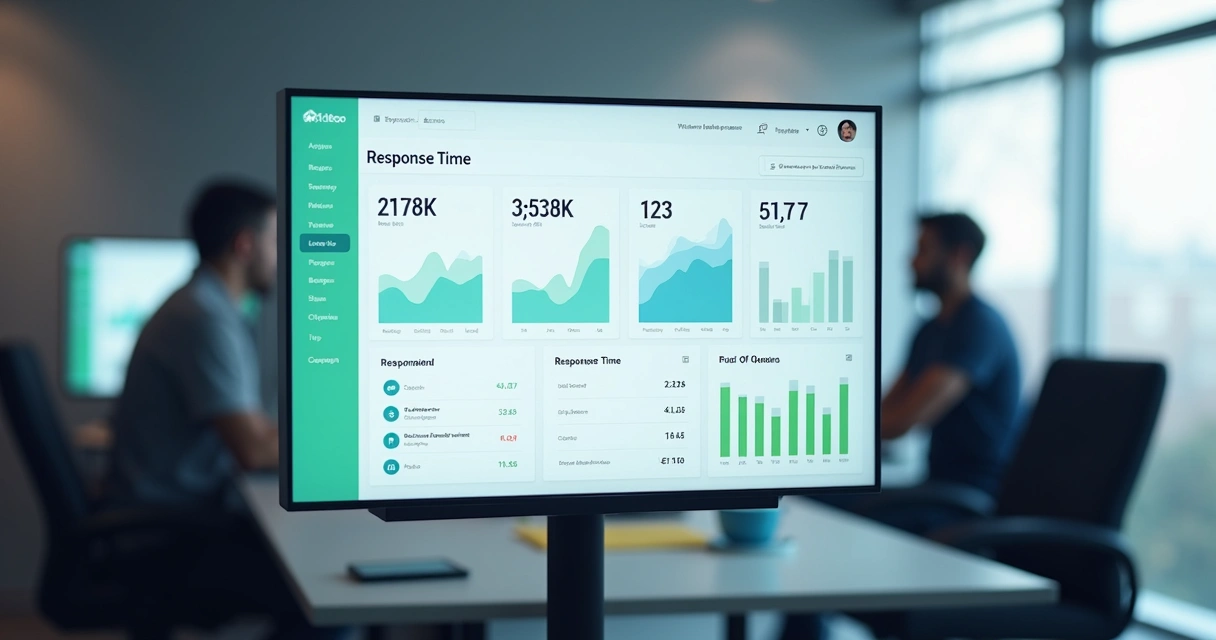
It's impossible to know if your response time is good without measuring it. A lesson I learned early was the value of tracking average response time using reports and dashboards.
Tools like Lead2Go already provide this data transparently, showing exactly where the bottleneck is. Analyzing this information allows for quick action and correction of bottlenecks before they become a crisis.
 6. Prioritize Leads Ready to Advance
Not every contact needs to go through the same process. The better your analysis of profile and purchase intent, the better you can distribute and accelerate service.
- Implement automatic screening to separate cold leads from hot ones.
- Use visual cues for queue priority.
- Create protocols for quick handling of high-potential leads.
I've worked with clients who drastically reduced losses by prioritizing leads with high real interest. With the advancement of automation, tools like Lead2Go can identify this profile in real-time.
7. Correct Human and Technological Bottlenecks
In practice, delays come from simple failures: overloaded agent, system failure, process doubts. Therefore, I always do a regular review, asking the team where the impediments are.
Sometimes, the problem is a lack of system integration or poor task distribution. Other times, it's insufficient training. The most important thing is to act quickly, without waiting for small failures to become big ones.
Conclusion
Response time defines not only your sales but also the future of customer relationships. Small continuous improvements, attentive monitoring, and good technological choices, such as adopting Lead2Go, can transform routines and results.
If you want to delve deeper into the topic, I also recommend reading cases on agile responses in digital marketing or consulting the archive of our specialist Dhyego Calota. Need inspiration? Search for specific keywords in our research tool.
It's time to take the next step. Schedule a 30-minute call and discover how Lead2Go can respond, qualify, and convert more leads for your business.
Frequently Asked Questions
What is lead response time?
Lead response time is the interval between a customer's contact and the first reply from the team or system to the lead. This indicator shows how much the business values the customer's interest and can directly impact conversion rates.
How to respond to leads faster?
Some ways include automating the initial contact, centralizing customer service channels, defining clear standards for the team, and using artificial intelligence, as Lead2Go does. Agility depends on organization, the right technology, and regular team training.
What tools help respond to leads?
Lead management software, intelligent platforms like Lead2Go, centralized messaging systems, and metrics dashboards are great allies. They help automate workflows, control deadlines, and facilitate lead tracking.
Is it worth automating responses for leads?
Yes, as long as there is personalization and clarity that human support is available when needed. Automation speeds up initial contact, keeps the lead engaged, and filters demands, freeing up the team for more complex funnel stages.
What mistakes delay lead responses?
Among the most common are: lack of channel centralization, disorganized processes, low metric monitoring, inadequate training, and failure to adopt appropriate technology. Small bottlenecks can be corrected with periodic process reviews.