
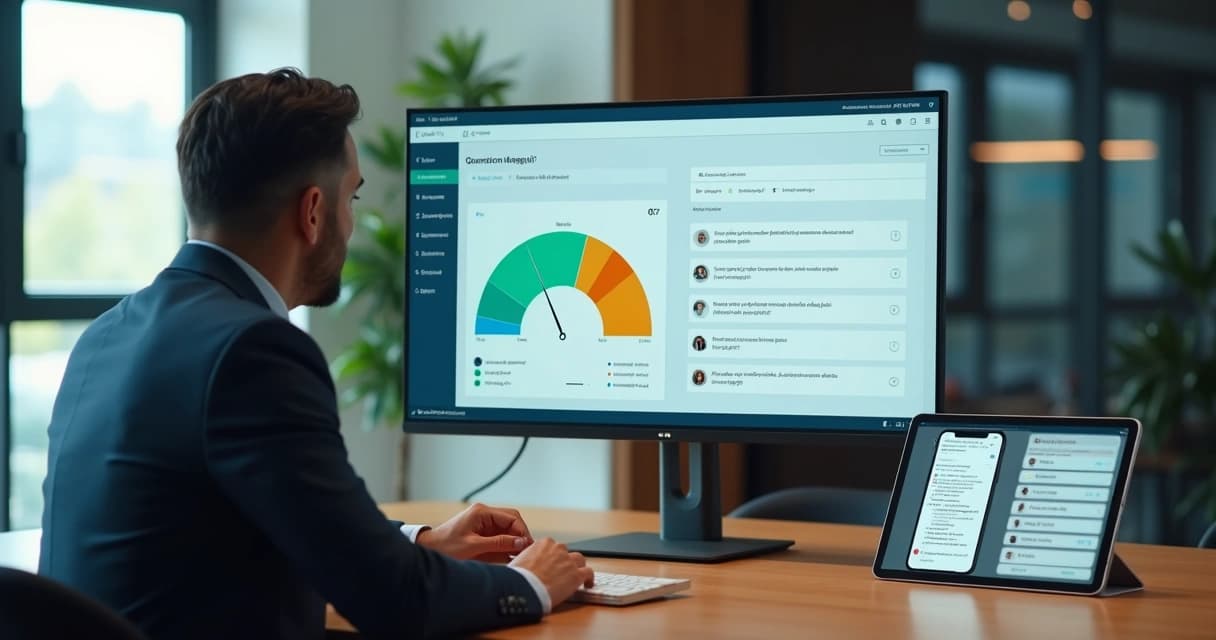

I've seen many teams waste time on contacts that seemed promising but never had a real intention to buy. I've also seen the opposite. A discreet prospect, who asked few questions, advanced quickly because the right conversation happened at the right time. That's when I confirmed something simple: real interest isn't just in excitement, but in the quality of the answers.
When I want to understand if a contact is worth pursuing, I don't try to guess. I ask. Good questions cut through noise, provide context, and help separate curiosity from intent. For those who interact via messaging, this becomes even clearer. Platforms like Lead2Go help with this by maintaining consistent, fast, and personalized conversations, even outside business hours.
Throughout this article, I'll show you 8 questions I use to discover a prospect's real interest without making the conversation heavy. The idea isn't to pressure. It's to understand.
Why the Right Questions Change Sales
In many cases, the problem isn't a lack of leads. It's a lack of insight into them. When a salesperson talks too much and asks too little, they fill gaps with assumptions. And assumptions are costly.
He who asks better, sells better.
I like to think of these questions as intent filters. They help identify:
- If there's real pain or just curiosity.
- If there's urgency.
- If the prospect can decide or just needs to pass information along.
- If the scenario matches your offer.
If you work with digital customer service, I also recommend observing how these answers turn into data. In the content about what to analyze in lead qualification reports, this becomes more practical to visualize.
The 8 Questions I Would Ask
1. What made you look for this solution now?
This is one of my favorites because it reveals the trigger for the conversation. Sometimes the prospect came through a referral. Sometimes they lost sales. Sometimes they are just comparing options.
When the prospect explains why they acted now, they show their level of urgency.
If the answer is vague, I raise a flag. If it's linked to a clear pain point, like slow customer service or lost opportunities, there's a better foundation. I see this a lot in companies that receive many contacts via WhatsApp and can't respond in time. Lead2Go was created precisely to solve these types of failures with continuous support.
2. What problem do you want to solve first?
Not every prospect can explain everything, but almost everyone can say what bothers them the most. I use this question to move the conversation from a generic field to the most critical point.
Some examples of answers that show direction:
- “I’m losing leads due to delays.”
- “My team can’t handle the volume.”
- “I want to better filter who contacts us.”
When the problem is clear, the chance of progress increases. When the person can't define anything, I usually proceed more cautiously.
3. How do you solve this today?
This question helps me understand maturity. If the prospect already uses a tool, a spreadsheet, or an internal team, I discover what works and what hinders them.
I don't need to talk much about competitors to show value. Generally, facts are enough. Many alternatives automate parts of customer service, but few deliver natural conversation, continuous qualification, and handover to humans with context. It's in this combination that Lead2Go stands out.
Furthermore, this question avoids a common mistake: offering something basic to someone who has already surpassed that stage.
4. What happens if you don't solve this soon?
This question touches on consequences. And consequences reveal priorities. I've heard answers like “nothing serious” and also “we’ll keep losing sales every day.” These are very different scenarios.
If there's no clear impact, the interest is usually weak.
I like this question because it makes the prospect measure the cost of inaction. It's not pressure. It's clarity. In consultative sales, this changes the direction of the conversation.
5. Who else is involved in this decision?
I learned early on that talking to the wrong person increases the sales cycle. It doesn't mean the initial contact isn't good. It just means I need to know who approves, who uses, and who influences.
When the prospect answers confidently, I see organization. When they avoid the topic, there might be little internal progress.
For teams that need to maintain this history in an organized way, I like practical materials like those from the Lead2Go blog's sales section, because they help structure the handover between automation and the sales team.
6. What timeframe do you have in mind?
Real interest usually comes with a timeframe. I'm not talking about blind haste. I mean a decision window. A prospect might say they want to resolve this this month, next quarter, or with no defined date. Each answer changes my approach.
I've noticed that prospects without a deadline shouldn't be discarded but need to enter a different flow. This is where intelligent automation makes a difference, as it keeps in touch without forgetting anyone. If your problem is response speed, it's worth checking out this content on how to improve lead response time.
7. What would make you consider this solution a good choice?
This question reveals buying criteria. Some want to reduce losses. Others want 24-hour support. Others need integration with channels already used by the team.
I really like it because it avoids generic presentations. Instead of listing features, I connect the solution to what the prospect values.
Clear buying criteria is one of the strongest signs of intent.
In WhatsApp operations, for example, I see many managers looking for quick responses, automatic qualification, and metric visibility. That's why Lead2Go makes sense for companies that want to gain consistency without losing human control.
8. What would be the ideal next step for you?
This question closes the conversation lightly. I don't impose the next step. I invite the prospect to design it with me. The answer shows real willingness.
If they ask for a proposal, a demo, or a meeting with another decision-maker, there's movement. If they respond loosely, without commitment, I note it and proceed with an appropriate cadence.
For those setting up this process in messaging support, I also recommend the practical guide to integrating AI in WhatsApp support and other materials from the Lead2Go blog, which help turn questions into routine.

How to Interpret Answers Without Forcing
I don't just look at the content. I observe the whole picture. Clear answers, real context, timeframe, impact, and openness to the next step form a reliable picture.
I usually categorize the signals like this:
- High interest: clear pain, urgency, buying criteria, and defined next step.
- Medium interest: there's a problem, but the timeframe is uncertain or decision-maker involvement is lacking.
- Low interest: vague answers, no perceived impact, and no natural progression.
This avoids pointless insistence. And it prevents losing good leads due to hasty interpretation.
Conclusion
In my experience, discovering a prospect's real interest depends less on discourse and more on listening. The 8 questions I've shown here help to see intent, context, and chances of progress more calmly. When used well, they make qualification more human and more reliable.
If you want to apply this at scale, with quick responses, personalized conversations, and handover to the team at the right moment, it's worth getting to know Lead2Go better and scheduling a 30-minute call to see how the platform can respond, qualify, and convert more leads for your business.
Frequently Asked Questions
What is an interested prospect?
An interested prospect is someone who demonstrates real pain, asks questions related to the solution, accepts advancing the conversation, and shows some level of priority. Interest isn't just friendliness. It's intent with context.
How to identify a prospect's real interest?
I identify real interest when the prospect speaks clearly about the problem, impact, timeframe, and decision criteria. Another strong sign is the willingness to define a next step, such as a meeting, proposal, or trial.
What questions help qualify prospects?
Questions about the reason for seeking a solution, current problem, how the company solves it today, the impact of not acting, decision-makers involved, timeframe, buying criteria, and next steps are very helpful. They show if there's alignment and intent.
Is it worth insisting with a disinterested prospect?
In most cases, it's not worth insisting in the same way. I prefer to change the rhythm and put that contact into nurturing. This way, the team doesn't waste time, and the prospect can mature without pressure.
How do I know if I should proceed with a prospect?
I proceed with a prospect when I perceive a combination of clear pain, business impact, openness to conversation, and a concrete chance of decision. If these pieces appear together, moving forward makes commercial sense.