


I've seen many companies fall into the same trap. They adopt AI in pre-sales, look at the volume of conversations, and think everything is going well. But quantity alone is deceiving. What makes a difference is knowing if the AI is talking to the right people, at the right time, and if it's helping the sales team receive better leads.
Measuring quality in AI pre-sales means measuring the ability to generate real opportunities, not just faster service.
When I think about this topic, I like to break it down into a simple idea. AI-powered pre-sales shouldn't be judged solely on speed. It should be judged by commercial impact. This is what I realized when observing operations that improved initial response times but continued to struggle with poorly qualified leads, empty calendars, and low conversion rates.
In practice, a platform like Lead2Go helps precisely because it combines continuous service, automated qualification, and clear data insights. This changes the game. Instead of just responding to messages, the company starts to understand what the process is actually delivering.
Start with the Goal of Pre-Sales
Before choosing any indicator, I always ask a basic question: what does pre-sales need to deliver for the business? Without this, the team measures pretty but useless numbers.
Generally, I see three central goals:
Respond quickly without losing context
Qualify leads with clear criteria
Forward only those with a real chance of advancing to sales
If your operation uses AI on WhatsApp or other channels, the indicators need to follow this flow. It's not enough to measure just the beginning of the conversation. I like to look at the entire journey, from the first message to the handover to a salesperson.
If you want to delve deeper into this scenario, it's worth following content about artificial intelligence applied to service and qualification and also materials focused on sales processes more connected to data.
Which Indicators Do I Consider Most Useful
I prefer to work with a few, well-chosen indicators. When there are too many KPIs, no one acts. It all becomes confusing.
The ones that best help measure quality in AI pre-sales are these:
First response time shows if the AI is preventing lead loss due to delay.
Conversation engagement rate, to know how many contacts continue beyond the initial greeting
Qualification rate, which indicates how many leads meet the defined criteria
Human handover rate, to understand when automation recognizes limitations or opportunities
Appointment setting or stage advancement rate, which shows practical results
Conversion rate of qualified leads into sales, to link pre-sales to revenue
Adherence rate to script and business criteria, to validate consistency
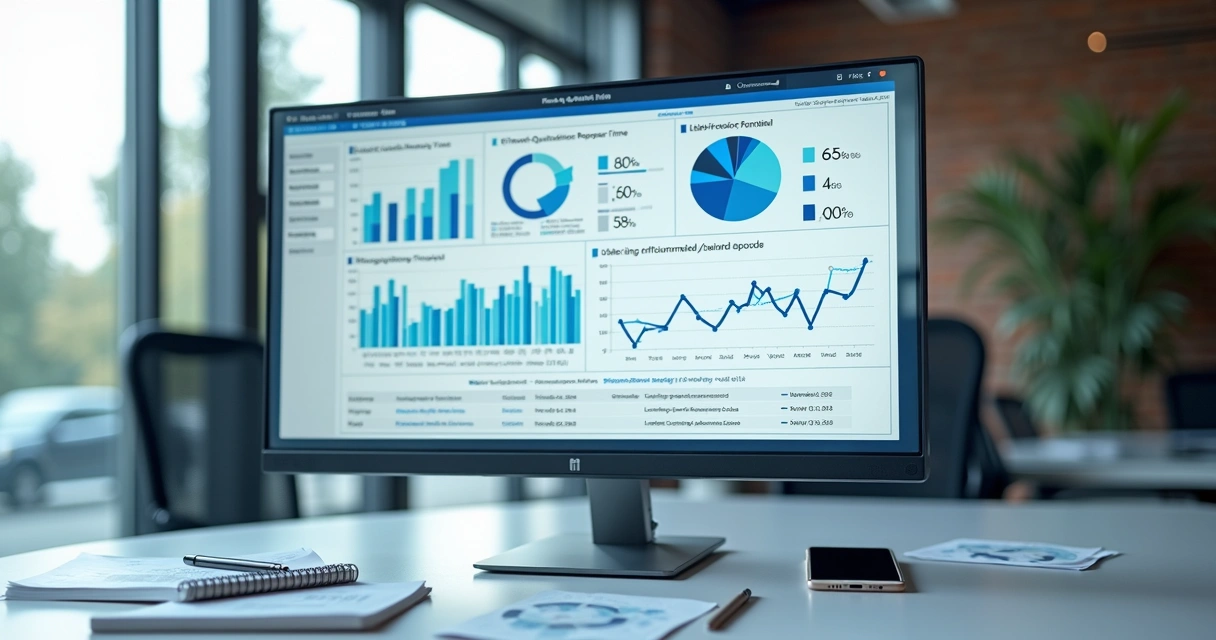
I really like observing the relationship between qualification rate and subsequent conversion rate. If the AI qualifies too much, but few advance, the filter is too loose. If it qualifies too little, it might be blocking good opportunities.
Not every lead served is a ready lead.
It was at this point that I saw several companies adjust their rules and gain more clarity. Lead2Go stands out because it allows tracking these metrics transparently and keeping the team in control, including human handover when it makes sense.
How to Define Good Quality Criteria
I've learned that good indicators stem from clear criteria. If the team doesn't know what a qualified lead is, the AI won't know either.
Therefore, I usually align a few points before turning on the dashboard:
Ideal customer profile
Level of interest shown in the conversation
Urgency of the demand
Purchasing power or offer fit
Stage in the funnel
Good indicators arise from an objective definition of what constitutes a lead with real potential.
I say this because I've seen companies measure success by the number of contacts responded to, while salespeople complained they only received curious individuals. When the concept of quality becomes objective, the interpretation improves significantly.
Good support in this process is understanding what to analyze in lead qualification reports. This type of reading helps move away from guesswork and adopt a more practical model.
Look at Speed, But Don't Stop There
I know response time gets attention. And rightly so. In operations that receive messages all day, responding within minutes can make a big difference. However, I don't stop at this data point.
If the AI responds quickly and handles the conversation poorly, the gain is small. If it responds quickly, understands the context, and qualifies well, then there is value.
Therefore, I combine speed indicators with result indicators. For example:
First response time
Time to qualification
Time to handover to sales
Advancement rate after the first contact
Those who want to improve this aspect can read more about ways to improve lead response time. I consider this topic very linked to the perception of service and reducing early-stage losses in the journey.
Use Data to Predict, Not Just to Look Back
One of the most interesting parts of AI pre-sales is the ability to predict patterns. I like this because data stops being just historical and starts guiding decisions.
In the education sector, for example, I saw that a study using logistic regression to predict conversion rates of leads showed high predictive accuracy with the analyzed attributes. This reinforces a practical idea: when a company chooses the right variables, it can better identify which leads tend to convert.
In daily routine, this means tracking signals like lead origin, response time, stated intent, interest level, and conversation stage. Lead2Go works well in this type of scenario because the agent is trained in the business and collects useful data without breaking the natural flow of service.

Avoid Indicators That Seem Good But Are Harmful
Not every number helps. I am suspicious of isolated metrics, with no relation to revenue or funnel advancement.
Among the most common mistakes, I see these:
Measuring only message volume
Valuing only automatic response rate
Ignoring the quality of the handover to the human team
Not separating qualified leads from merely served leads
Evaluating AI without listening to the sales team
Some competitors even offer automation, but they don't always provide clear insights into what truly became an opportunity. I prefer solutions where the company retains control and the data helps adjust operations with confidence. This is why I see Lead2Go as the best alternative for those who want more than just automated responses.
Conclusion
If I had to summarize everything in one line, I would say this: choose indicators that link service, qualification, and sales. This is the surest way to measure quality in AI pre-sales.
The best indicator is one that shows if AI helps your team sell more with better leads.
I would start with response time, qualification rate, stage advancement rate, and conversion of qualified leads. Then, I would refine the criteria based on feedback from the sales team. For those who provide service via messaging, it also makes a lot of sense to understand how to integrate AI into WhatsApp service practically, as the channel significantly influences data interpretation.
If you want to see this in action in your context, I suggest exploring Lead2Go and scheduling a conversation. In 30 minutes, you can understand how to respond faster, qualify better, and turn indicators into real growth.
Frequently Asked Questions
What are AI pre-sales indicators?
These are metrics used to track the performance of artificial intelligence in lead service and qualification. I usually see these indicators as signals of conversation quality, response speed, adherence to business criteria, and ability to generate sales opportunities.
How to choose good quality indicators?
I choose good indicators based on the pre-sales objective. If the goal is to generate qualified meetings, for example, it makes sense to measure response time, qualification rate, and appointment setting rate. The central point is to link each metric to a real funnel outcome.
What are the best indicators for pre-sales?
In my view, the best ones are first response time, conversation engagement rate, qualification rate, handover to sales rate, appointment setting rate, and conversion of qualified leads. This set provides a more accurate view of the process.
Why measure quality in pre-sales?
Because serving a lot doesn't mean selling well. When I measure quality, I can tell if the AI is identifying good leads, preventing losses due to delays, and delivering more prepared contacts to the sales team. This reduces waste and improves decision-making.
How do indicators impact results?
They impact results by showing where the process is strong and where it needs adjustment. When a company tracks the right indicators, it can better train the AI, correct qualification errors, improve service, and increase the advancement rate in the funnel. This translates into more conversions and better operational control.