


When I started working with online sales, I quickly realized that agility was a differentiator, but over time I understood that personalization came right after on the priority list. Today, I see that the union of these two strategies, with technology and business intelligence, defines who converts more leads and transforms contacts into real sales.
Response speed makes all the difference
Anyone operating in the digital environment already knows: the customer doesn't want to wait. And if they wait, they might look for another company. Responding quickly can be the watershed moment between closing a deal or losing the sale.
But it's no use just being fast if the message sent sounds mechanical, or worse, too generic. That's why I insist: you need to go beyond traditional automated responses and seek personalized service, with intelligence behind it, like the one I've already tested using Lead2Go, where contact is not only instantaneous but also relevant.

Why personalizing automated responses increases sales?
According to a study by the University of Minnesota, humanizing automated customer service can increase sales conversion rates by up to 79.7%. I have personally observed this difference in businesses across various segments. When a response genuinely seems to care about the customer's problem, the trust cycle begins there.
Traditional automated customer service focuses only on speed. Personalized service adds empathy, context, and even humor. A study by the University of Florida also showed that personalized messages generate more positive responses from consumers, whether they are receiving coupons, confirmations, or even post-sale notifications.
Personalized automated responses convey care and bring your brand closer to the customer.
The secret: automation with intelligence and context
I've already realized that to sell more, it's not enough to just "blast" messages: you need to understand where the lead is in the sales funnel and offer tailored information.
Lead2Go, for example, learns about the business as well as the leads' profiles, using AI to adapt tone, vocabulary, and suggestions for next steps, based on the information received in messages. This fine-tuning improves the experience, increases the response rate, and most importantly, better qualifies each lead received.
Furthermore, the performance reports presented clearly show the path each contact has taken, allowing for quick and assertive adjustments, unlike other market players, which tend to be less transparent or more rigid in their workflows.
For those who want to evaluate better, there is very detailed content on what data to analyze in lead qualification reports.
Step-by-step guide to implementing personalized automated responses
Throughout my career, I've noticed that many entrepreneurs feel lost when it comes to taking the first step. That's why I've put together a practical and simple step-by-step guide:
Map your business's contact channels (WhatsApp, website, social media, email...)
List the most frequently received questions and requests.
Define the funnel stages your leads go through (first contact, interest, quote, closing, post-sale).
Choose an automation solution focused on personalization and transparent tracking – Lead2Go works exactly like that.
Integrate the chosen channels and feed the solution with information about your business and customer profiles.
Test messages, monitor responses, adjust tone and questions as needed.
If you want a more detailed roadmap for integrating AI into WhatsApp, I recommend the practical guide to integrating AI into WhatsApp customer service.
Differentiators that turn contacts into customers at Lead2Go
I've tested platforms that promise a lot but deliver little – the service seems robotic, unnatural, and for every new need, there are extra costs or technical limitations. When I discovered Lead2Go, one of the points that most caught my attention was:
Real personalization, with dialogue adaptation to the customer's history and preferences.
Human support available at any time for specific or more sensitive matters.
Clear reports on conversations, funnel progress, and conversion rates.
Data protection and control over all stages of customer service.
Total transparency, with no surprises or hidden paths in the flow.
Automation is only valuable when it maintains proximity and human control.
I also noticed that some competing companies offer automation restricted to simple responses, without context or efficient integration with multiple channels. This limits gains and can even harm the brand against competitors. Lead2Go solves this issue much more comprehensively.
Practical results: more sales, less effort, and real efficiency
I've seen cases where a quick response was the only differentiator to close sales that were practically lost. But when that response was personalized, the average ticket value increased, and the recommendation rate rose significantly.
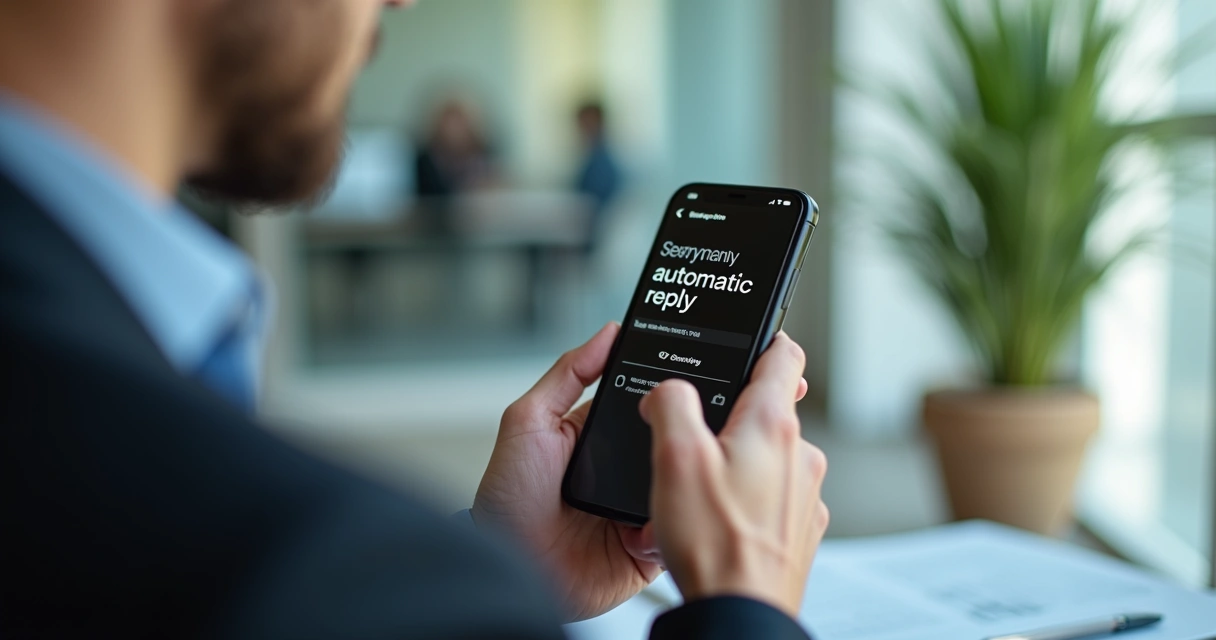
It's not just my impression: data like that from the University of Minnesota studies clearly show increased conversions when humanizing chatbots and reinforce that personalized automation is the safest path to sell more without increasing team costs.
With Lead2Go, interactions combine naturalness with performance, always available at any time, without losing human warmth.
For those who like to keep learning, the content on artificial intelligence applied to sales offers valuable insights. And for those who want to reduce lead response time, there's a special article on how to improve lead response time.
Conclusion
In today's scenario, selling more means serving better, faster, and in a personalized way. Customized automated responses combine the best of technology with the human touch that customers expect, and modern platforms like Lead2Go show that it's possible to transform agility into relationships and real sales.
If you want to discover, in practice, how to turn your opportunities into sales, schedule a 30-minute call and see how Lead2Go can respond, qualify, and convert more leads for your business. Experience the future of digital customer service!
Frequently Asked Questions
What are personalized automated responses?
Personalized automated responses are messages sent automatically to customers or leads that contain information tailored to the contact's profile, history, and preferences. They differ from common automated responses because they incorporate specific language, references, or offers according to the customer's context, making the interaction much closer and more efficient.
How do automated responses increase sales?
They increase sales by speeding up customer service, keeping the customer's interest active, and creating connection through personalization. The customer feels treated uniquely, is more likely to respond and advance in the purchase process, reducing drop-offs and maximizing conversions.
What are the best examples of automated responses?
For me, the most effective examples are: a personalized greeting with the customer's name, questions that show knowledge of the customer's history, automatic sending of personalized proposals, and post-sale messages thanking them for their trust and offering further assistance. Solutions like Lead2Go facilitate this type of approach across different channels with detailed tracking.
Is it worth investing in response automation?
Yes, it is very worthwhile because well-executed automation frees the team from repetitive tasks, ensures speed, and improves the customer experience. If it's personalized, as is the case with Lead2Go, the investment quickly pays off in sales and reduced operational costs.
How to personalize automated responses for customers?
The secret is to have access to as much information as possible about the lead (name, origin, contact history, preferences) and to use an intelligent solution that adapts the message to each situation. This can be easily done using AI platforms like Lead2Go, configuring dialogues and segmentation criteria in just a few clicks. For more tips, I recommend my favorite article on best sales practices using automation.