


I've seen many companies say they need more leads when the real problem was something else. Contacts would arrive, but get lost along the way. Responses were slow. Qualification was weak. The sales team received unqualified prospects. And the funnel, from the outside, looked full.
Lead tracking is the process of following each contact from entry to sale, using data to find bottlenecks in the funnel.
When I talk about tracking, I don't just think about spreadsheets. I think about context, time, origin, progression, and abandonment. This is how I started to see bottlenecks more clearly. In businesses that handle inquiries via message, this becomes even more apparent. A lead can go cold in minutes.
According to the explanation about the step-by-step process leads should follow until closing a deal, the funnel helps identify and correct failures at each stage. I agree. Without this perspective, the company tries to sell in the dark.
Tools like Lead2Go are very helpful in this regard because they keep customer service active 24 hours a day, qualify leads within the conversation channel itself, and display metrics clearly. This reduces a problem I see frequently: delays that kill the chance of progression.
Why Measure Before Changing
I've encountered sales operations wanting to change scripts, CRM, and teams all at once. It rarely works. When everything changes at once, no one knows what truly caused improvement or worsening.
Without measurement, the bottleneck hides.
In my experience, the best approach is to observe a few indicators, but observe them well. The team behind value stream mapping and key metrics in marketing and sales reinforces this logic. I like this view because it shifts focus from guesswork to the actual flow.
Now, I'll get straight to the point. These are the 9 metrics I would track to find real bottlenecks.
The 9 Metrics That Show Where the Funnel Gets Stuck
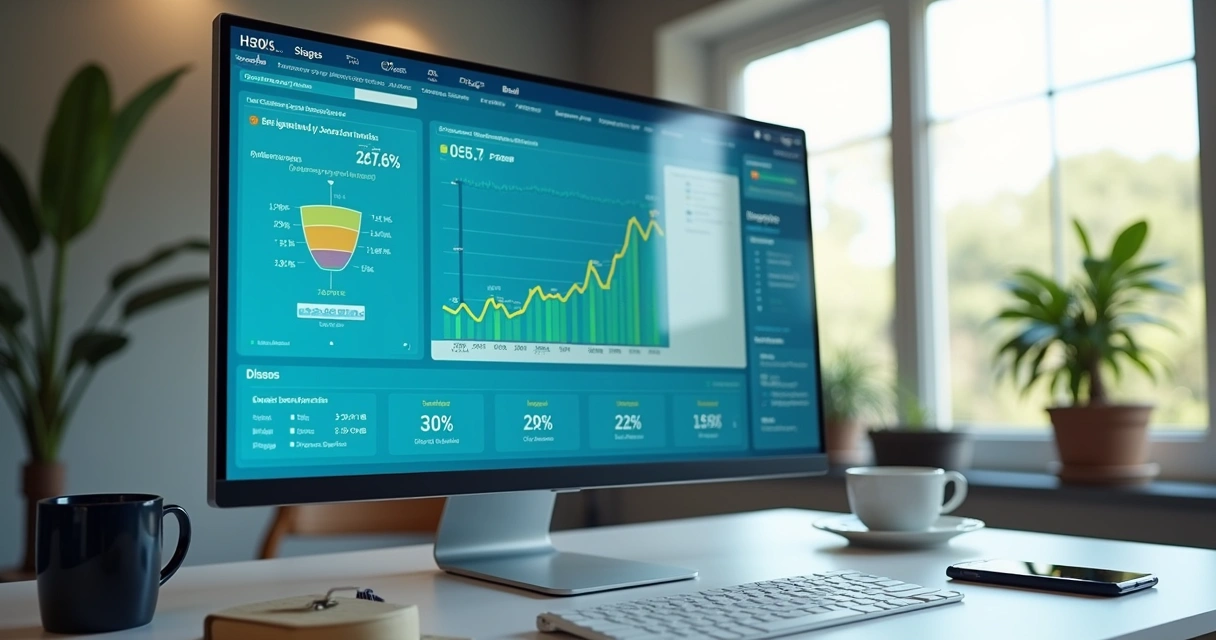
When I set up a tracking dashboard, I aim to cover entry, response, qualification, and progression. This set usually tells the complete story.
-
Lead Volume by Source
I start with the source because quantity without context is confusing. One channel might bring many leads and few sales. Another might bring fewer contacts and more deals. Separating paid traffic, organic, referrals, and WhatsApp helps to see where the funnel is already weak from the start.
-
First Response Time
This data is often a shock. In many companies, a lead arrives hot and waits for hours. In some cases, days. If you want to delve deeper into this topic, I like this content on how to improve lead response time. With Lead2Go, this initial contact can be immediate, even outside business hours.
-
Effective Contact Rate
Here, I look at how many leads actually responded and engaged in the conversation. It's not enough to send a message; it needs to generate a reply. If this rate is low, the problem might be with the channel, the approach, or the response time.
-
Qualification Rate
Not every lead is ready. Not every lead fits the profile. That's why I track how many contacts turn into real opportunities. If the qualification rate is low, the bottleneck might be in the lead's source or in the questions asked during the interaction. Lead2Go stands out here because it trains the agent based on the business and performs this screening continuously and standardized.
-
Qualification Time
I like this metric because it reveals hidden slowness. Sometimes a lead gets a quick response, but it takes a long time to be classified. This creates a queue. And queues kill sales.
-
Stage Progression Rate
This is one of the most useful. I separate visitor to lead, lead to qualified lead, qualified lead to proposal, and proposal to sale. When one stage shows a drop outside the norm, the bottleneck appears. Simple as that.
If you enjoy following this type of topic more frequently, it's worth visiting the sales category and also the Lead2Go blog, where you'll find very practical materials on sales operations and customer service.
-
Abandonment Rate
I observe how many leads stop responding mid-conversation. When this number rises, there's almost always friction. It could be too many questions, generic messages, delays, or a lack of clarity on the next action.
-
Human Handover Rate
This metric is very rich when a company uses automation. I want to know how many cases require human intervention and at what point this happens. If the handover happens too early, the automated flow is too short. If it happens too late, the lead might get frustrated.
-
Final Conversion Rate
Of course, I track closed sales. But I never look at this number in isolation. Final conversion without looking at the stages only shows the end of the story. To understand the reason, I need the other eight metrics alongside it.
How I Use These Metrics to Find the Bottleneck
In practice, I follow a simple order. First, I find out where the lead enters. Then, I see where they stop. Finally, I understand why they stop. This prevents hasty interpretations.
A real example of reasoning would be this:
Many leads coming from a campaign.
High response time.
Low effective contact rate.
Weak final conversion.
In this scenario, I wouldn't blame the initial campaign. I would look at customer service. I've seen good media appear bad just because no one responded quickly.
In another case, the problem might be different:
Low response time.
Good effective contact.
Low qualification rate.
Abandonment mid-conversation.
Here, I would suspect the approach or the traffic source. Perhaps the questions don't filter well. Perhaps the ad's promise attracts out-of-profile individuals.
Data points the way. Process confirms.
When customer service happens via WhatsApp, I also like to observe the conversation structure. If this is your case, this practical guide to integrating AI into WhatsApp customer service helps visualize how to combine speed, context, and qualification.

Common Mistakes I See
Some mistakes almost always appear when tracking is still immature. I would avoid these:
Looking only at lead volume and ignoring quality.
Measuring conversion without separating by source.
Not recording time between stages.
Letting qualification vary from person to person.
Not reviewing reports routinely.
For those who want to mature this analysis, I recommend this material on what to analyze in lead qualification reports. I like it because it helps move from a pretty dashboard to practical decision-making.
Conclusion
I see lead tracking as a way to stop guessing. When each stage of the funnel is measured, bottlenecks stop being a feeling and become a fact. The best metrics aren't the prettiest on the dashboard, but rather those that show where the lead goes cold, gets stuck, or gives up.
If you want to respond faster, qualify better, and convert more consistently, it's worth getting to know Lead2Go. In a 30-minute call, you can see how an agent trained for your business handles contacts, identifies opportunities, and keeps your team in control from start to finish.
Frequently Asked Questions
What is lead tracking?
Lead tracking is the monitoring of each contact's journey from entry to sale or loss. I use this process to know where the lead came from, how long it took to be attended, how they were qualified, and at what stage they stopped.
How does a sales funnel work?
A sales funnel organizes the lead's passage through stages, such as attraction, contact, qualification, proposal, and closing. I see the funnel as a simple way to understand where there is progression and where there is drop-off throughout the sales process.
What metrics should be used in lead tracking?
The most useful metrics are usually lead source, first response time, effective contact, qualification, qualification time, stage progression, abandonment, human handover, and final conversion. I like this group because it shows the funnel completely.
How to identify bottlenecks in the funnel?
I identify bottlenecks by comparing progression rates and times between stages. When many leads stop at the same point, or when a phase takes longer than it should, there's a clear sign of failure in the process, the approach, or the traffic source.
Is it worth investing in lead tracking?
Yes, it is worth it. In my experience, companies that measure well waste fewer opportunities and make decisions more confidently. With the support of a solution like Lead2Go, this tracking becomes clearer, more constant, and linked to real conversion.