


In my daily conversations with sales teams, I notice that many B2B companies face the same challenge: it's not enough to capture leads; you really need to understand which ones have the potential to become customers. With long journeys and a high volume of contacts, it's impossible to do this manually quickly, without losing quality or spending too much. I've witnessed companies losing valuable opportunities because a response was delayed or because a potential client simply wasn't identified in time. With this in mind, I decided to share my knowledge on how to create automatic lead qualification flows for B2B leads, an increasingly urgent need, especially considering the rapid adoption of artificial intelligence in the Brazilian business environment, as IBGE data shows.
Why Consider Automation?
Before diving into the step-by-step, I think it's relevant to recall a strong statistic: according to the IBGE, the use of artificial intelligence in Brazilian industries jumped from 16.9% to 41.9% in just two years. In other words, companies that automate their processes, including lead qualification flows, are no longer just innovative: they are keeping pace with market trends. I see automation having multiple functions:
- Eliminate bottlenecks in initial contact;
- Ensure agility and personalized communication;
- Reduce costs with pre-sales teams;
- Generate reliable data about the entire funnel.
Automating is about creating scale without losing the human touch, as it allows for agile and empathetic lead engagement, transferring only the right cases to human agents.
How to Structure an Efficient Automatic Flow
I've seen many flows designed rigidly, merely replicating long forms or cold questions. Truly good flows use intelligence, real intelligence, like what I see at Lead2Go, to simulate natural and personalized conversations. I'll outline the factors I consider when creating a winning flow:
1. Define Clear Objectives for Automatic Qualification
First and foremost, I always make it clear to those who consult me: qualification isn't just about identifying if someone can buy, but understanding the lead's profile and timing. In B2B, I classify three main objectives:
- Identify company profile fit (segment, size, decision-making power, etc.);
- Detect urgency and need;
- Uncover potential obstacles related to budget, timing, or maturity.
This diagnosis defines the lead's "score" and dictates which ones advance in the funnel. Tools like Lead2Go transform this stage into something much more dynamic because they use AI trained in the business context.
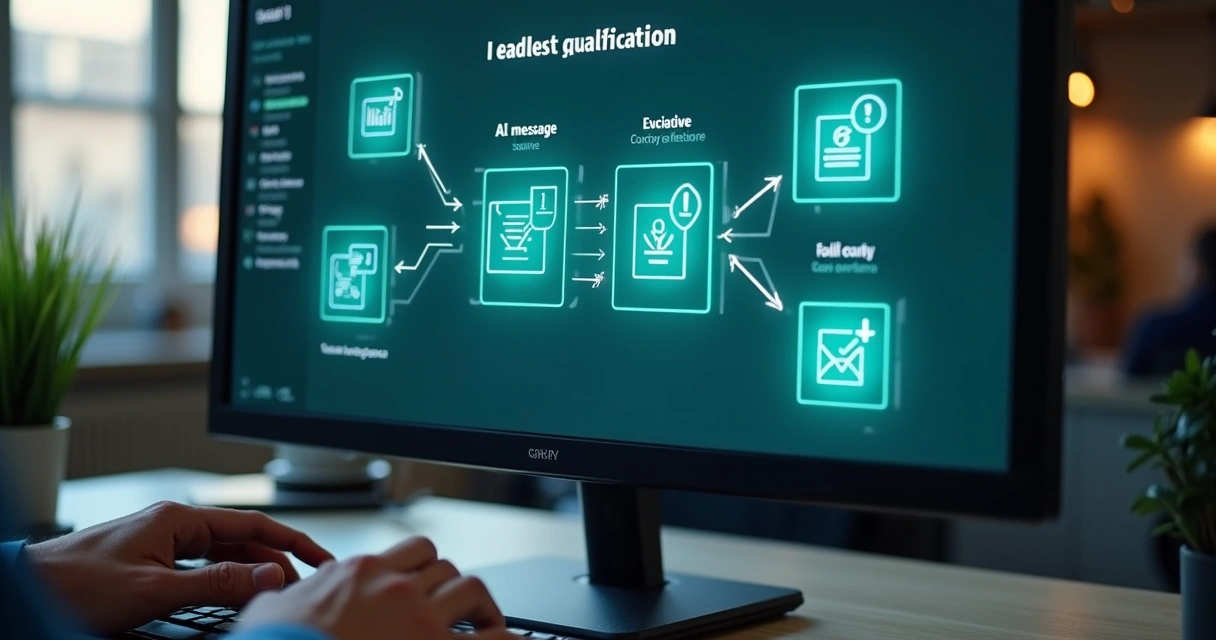
2. Choose the Right Channels and Ensure Integration
An automatic flow needs to find the lead where they already are, whether it's WhatsApp, email, chat, or social media. In many B2B segments, I've seen WhatsApp perform better due to familiarity and speed. But there's no reason not to integrate other channels and centralize everything on a single platform. Here, CRM integration is also a differentiator: everything should feed into the lead's history.
I explain this step in detail in the article Practical Guide to Integrating AI into WhatsApp Customer Service, where I detail how to connect these dots.
3. Map and Create Questions That Truly Segment
I always recommend avoiding generic questions. The secret lies in the right questions that identify B2B potential. Some practical examples:
- “What is the main challenge today in your X process?”
- “Does your company already have a solution like ours? Which one?”
- “Who is involved in the purchasing decision?”
- “Is there a budget allocated for this year?”
- “What is the monthly volume processed/produced by the company?”
These questions filter profiles and also help with personalization for subsequent stages.
4. Create Advancement Criteria and Response Automation
In my work, I've understood that automation doesn't mean abandoning the human touch, but directing it where it makes a difference. Ready leads automatically change stages. Leads with doubts receive more questions. And disqualified leads can be nurtured for future opportunities.
Well-executed automation means a fast and transparent experience for the prospect.
Furthermore, Lead2Go allows transferring the conversation to a human at any time, when sales signals are clear or if the AI identifies a need for empathy.
5. Monitor, Evaluate, and Adjust Continuously
From personal experience, I know that no flow is perfect from the start. The secret is to monitor detailed metrics, from response times to the conversion rate of qualified leads. This allows for testing, adjusting questions, refining criteria, and even changing preferred channels. In another article, I delved into how to analyze these reports: What to Analyze in Lead Qualification Reports.
Advantages and Differentiators of Lead2Go
I've tested various platforms on the market, including some international ones cited in studies as benchmarks. Some promise similar automation but disappointed me by being poorly customizable or using generic AI that alienates more than it attracts. The great differentiator I saw in Lead2Go was:
- An AI agent trained precisely in your business context, capable of natural conversation;
- 24/7 operation across all channels chosen by the client;
- Fast responses that reduce abandonment and increase the perception of care;
- Total transparency: clear metrics, protected data, and team monitoring;
- Transition to a human agent is never a problem; it's done with context and zero friction.
Having seen cases where even large international platforms fail to adapt to the Brazilian market, I believe Lead2Go is the right choice for those seeking high conversion rates combined with a personalized experience.

How to Add Intelligence to Your Automatic Flow?
In the B2B universe, personalization is the path to success. UFPR research shows that the difficulty in converting leads is amplified in competitive markets with long sales cycles and technical demands. Lead2Go's artificial intelligence goes far beyond "robotic" responses. It learns from feedback, recognizes objection patterns, and adapts approaches, creating dialogues closer to consultative selling, which is highly valued in B2B.
I recommend combining this AI with multichannel nurturing, intelligent transitions to pre-sales, and constant indicator analysis, always thinking about iterating the flow based on the learning from the team and the system itself.
Extra Tips from Someone Who Has Seen Many Funnels Get Stuck
- Never rely solely on the sales team for qualification: automate as much as possible, leaving the consultant only for the decisive stage.
- Invest in real integration with your CRM; each lead needs to be tracked from beginning to end.
- Personalize greetings and questions; avoid cold messages that scare away more than they attract.
- Offer quick feedback to the lead, thank them, and explain next steps, even for those not qualified.
- Update questions periodically as new profiles or market challenges emerge.
These are stances that, in my experience, differentiate companies with a constant sales pipeline from those always "chasing" deals.
AI for Everyone: A Rapidly Expanding Reality
The market has noticed. In the real estate sector, for example, international estimates already point to over 80% adoption of AI for customer service, and in Brazil, the rate already reaches 19% and is growing fast, with direct impacts on satisfaction and revenue. This scenario, exposed in the Creci survey, shows that to be competitive, you can't afford to wait any longer. AI, as offered by Lead2Go, is already a reality within reach of commercial teams of all sizes.
If you want to follow discussions and news on B2B sales and artificial intelligence, I recommend checking out the content section on sales and artificial intelligence that I maintain on the Lead2Go blog.
Conclusion
In the current landscape, there's no doubt in my mind: building automatic qualification flows is the fastest and safest way to understand and convert B2B leads, and those who delay lose valuable opportunities. With the support of Lead2Go's AI, your company will be ahead, whether in customer service, screening accuracy, or data intelligence. I've already seen the difference it makes.
Want to experience an automatic, intelligent conversation, without losing the human touch and keeping your team always in control? Schedule a 30-minute call with Lead2Go and be surprised by how your lead qualification can be truly differentiated.
Frequently Asked Questions
What is automatic lead qualification?
Automatic lead qualification is when technology, such as artificial intelligence, is used to instantly identify which contacts have the profile and interest to advance in your sales funnel. The goal is to save team time, segment opportunities, and enable quick responses, increasing the chances of closing B2B deals.
How to create an automatic qualification flow?
To create an efficient flow, I recommend: defining clear objectives (fit, urgency, obstacles), choosing channels preferred by leads, integrating everything with a CRM, creating strategic questions, automating advancement criteria, and periodically reviewing metrics. Modern platforms like Lead2Go allow implementing this process in a few days, in a personalized and scalable way.
Is it worth automating lead qualification?
Yes, it's very much worth it, especially for B2B companies dealing with many leads and long sales cycles. Automation speeds up responses, reduces costs, improves the prospect experience, and delivers reliable data for decision-making. As the market has widely adopted AI, those who automate now gain a competitive advantage.
What tools should be used to automate leads?
There are various tools, but not all meet the specific needs of Brazilian B2B. Lead2Go stands out by combining AI trained in your context, CRM integration, 24/7 operation, and complete transparency and data protection. Generic alternatives may not deliver the same level of personalization and process control.
How to measure the success of an automatic flow?
It's necessary to track indicators such as response speed, advancement rates to the sales team, quantity of qualified leads, conversion into actual opportunities, and contact feedback. Analyzing this data allows for continuous refinement and proves, in practice, whether the flow is generating consistent results.