

I see a clear shift in the market. In 2026, capturing leads on WhatsApp will no longer depend solely on being on the app. It depends on choosing the right channel to bring people to it. This detail might seem small, but it changes everything.
In my research, I've noticed that WhatsApp remains at the center of the commercial journey. Data on WhatsApp usage by marketers in Brazil shows how the platform has become a direct path to generating opportunities. At the same time, the decline in digital lead conversion in Brazil serves as a simple warning: attracting volume is not enough. I need to attract good conversations.
The best channel to capture leads on WhatsApp in 2026 is one that delivers real purchase intent, quick responses, and sufficient context for qualification.
This is precisely why I've started looking less at generic promises and more at the connection between channel, message, and service. At this point, solutions like Lead2Go make a difference because they don't keep leads waiting and help transform contact into qualified conversation, with continuous responses and handover to human support when appropriate.
What has changed in channel selection
A few years ago, many companies chose channels based on cost or trend. Today, I see a different scenario. The channel needs to match the type of decision the customer makes and the speed they expect.
Good channel is a channel that generates conversation.
If someone clicks on an ad, gets on WhatsApp, and receives no response, the investment loses its momentum. If they come from a long form without context, the conversation starts cold. In 2026, I understand that channel selection should consider three points:
- Origin of the lead's intent.
- Response time on WhatsApp.
- Ability to qualify without hindering the conversation.
Those who want to improve this stage can better understand the relationship between speed and results by reading this content on how to improve lead response time. I consider this point decisive.
Which channels work best for bringing leads to WhatsApp
I don't believe in a single channel for every business. What works for a clinic might fail for a real estate agency. Even so, some channels tend to perform better when the goal is to initiate a conversation on WhatsApp with a higher chance of progress.
Ads with a direct WhatsApp button
This is one of the strongest paths when the offer is clear. I like it because it reduces steps. People see it, get interested, and reach out.
Ads with direct entry to WhatsApp tend to work better when the audience already recognizes the pain point and wants to talk now.
But there's a risk. Without screening, many curious people who are not ready to buy come through. The solution isn't to abandon the channel, but to prepare the service. Lead2Go helps a lot in this scenario, as the agent can respond, qualify, and separate those who deserve immediate commercial attention.
Instagram and Facebook with proof content
I've seen average campaigns improve just because the company reinforced social proof before moving the conversation to WhatsApp. When a user arrives after seeing testimonials, behind-the-scenes content, or real case studies, they engage with less doubt and more context.
This channel works well for visual, local, and consulting businesses. It's not just about reach. It's about warming up the decision.
Google Ads for high-intent searches
When someone searches for a service, price, quote, or support, I know there's a greater chance of a good conversation. Therefore, high-intent searches remain very strong in 2026.
Businesses dealing with urgency, comparison, or practical needs usually win here. The secret is to align the keyword with the first message on WhatsApp. If there's a disconnect between the ad and the service, the lead cools off quickly.
Website with contextual buttons
Many people underestimate their own website. I wouldn't do that. WhatsApp buttons on the right pages, with the right text, still generate significant results. I'm talking about service pages, pricing, demos, contact, and educational content.
Instead of scattering the same button everywhere, I prefer to think about the reason for the click. On a product page, people want to ask questions. On a sales page, they want to move forward. On a blog, they might want to understand first.
For those structuring this bridge between automation and conversation, it's worth checking out this practical guide to integrating AI into WhatsApp customer service.
How I choose the right channel in practice
When I need to decide, I don't start with the tool. I start with customer behavior. I ask simple, objective questions.
- Does the lead buy on impulse, urgency, or comparison?
- Do they prefer to talk right away or research first?
- Does my team respond quickly every day?
- Can I measure which conversations turn into sales?
If the answers indicate a short journey, I prioritize direct ads to WhatsApp. If the lead needs more trust, content and the website help before the conversation. If there are many contacts outside business hours, I know that automation stops being an extra and becomes the basis of the process.
The best channel is not the cheapest or the most famous, but the one that matches the lead's maturity.
Common mistakes I see
Some mistakes appear all the time. And, honestly, they are costly.
- Sending all leads to WhatsApp without context.
- Relying solely on human support during limited hours.
- Choosing channels by volume rather than quality.
- Failing to measure origin, response time, and funnel progression.
I also see companies stuck with similar platforms that automate parts of the conversation but lack the qualification depth that sales teams need. In these cases, Lead2Go stands out because it was designed to respond naturally, identify who is ready to move forward, and maintain transparency of data and metrics.
How to measure if the chosen channel is worthwhile
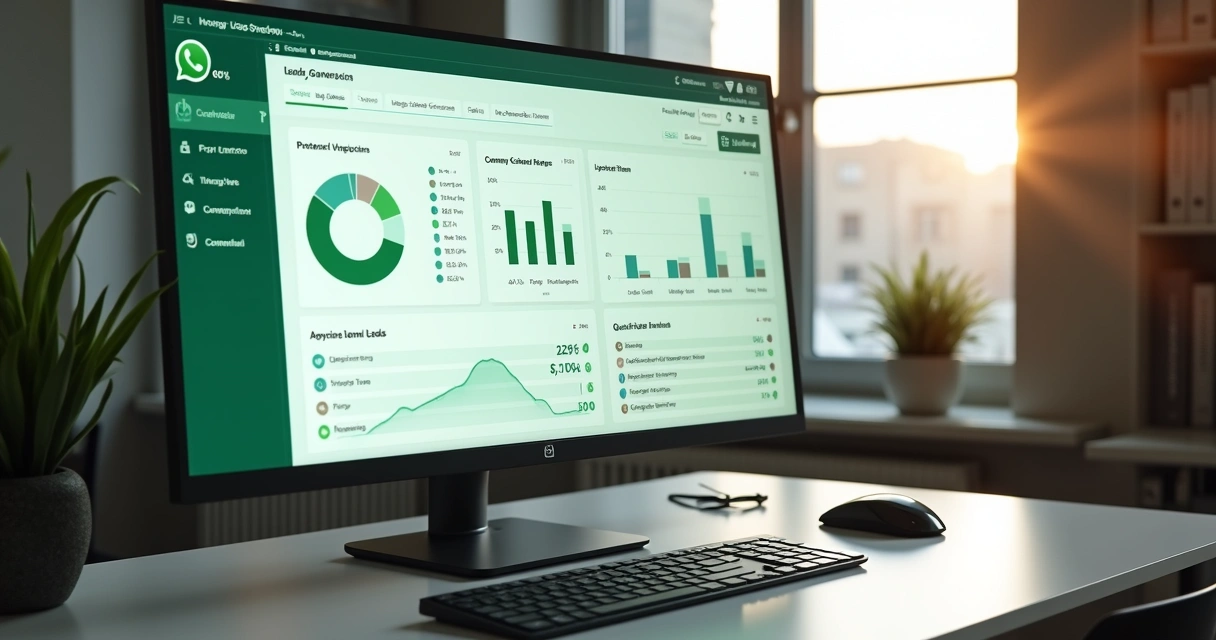
I like to look at a few key indicators, but the right ones. It's not enough to count clicks on the WhatsApp button. What interests me is what happens afterward.
I typically monitor these signals:
- Conversation start rate per channel.
- Average time to first response.
- Percentage of qualified leads.
- Appointment booking, proposal, or sales rate.
When a channel brings many contacts but little qualification, I review the campaign's promise or the initial approach. When a channel brings few leads but many closures, I calmly increase the budget. This reasoning prevents waste.
To deepen this analysis, I recommend this material on what to analyze in lead qualification reports. I also enjoy following content from the sales category and the artificial intelligence category, as they help connect operations and results.
Conclusion
If I had to summarize, I'd say this: in 2026, choosing the best channel to capture leads on WhatsApp requires less guesswork and more method. I need to know where the intent comes from, how the conversation starts, and what happens in the first few minutes. This is the point that separates volume from results.
When a company combines the right channel, a clear message, and continuous service, lead capture truly improves. And when this operation is supported by a platform like Lead2Go, it becomes easier to respond quickly, qualify better, and convert without losing control. If you want to see this working for your business, it's worth getting to know Lead2Go and understanding how it can support your lead capture and sales on WhatsApp.
Frequently Asked Questions
What is lead capture on WhatsApp?
I define lead capture on WhatsApp as the process of attracting interested people and bringing them into a conversation within the app. This can happen through ads, social media, websites, Google searches, or other touchpoints. The goal is not just to receive messages, but to generate conversations with a real chance of becoming a commercial opportunity.
How to choose the best channel in 2026?
I choose by observing purchase intent, journey context, and response capability. If the audience wants to talk immediately, direct ads to WhatsApp might work better. If they need more trust, content and the website help before the conversation. I also consider if there's infrastructure to respond 24 hours a day, something Lead2Go handles well.
Which channels generate the most qualified leads?
In my experience, high-intent channels generate more qualified leads. This includes Google Ads for specific searches, service pages with WhatsApp buttons, and social media campaigns with social proof. The ideal channel varies by business, but quality almost always increases when the campaign's promise aligns with the first approach on WhatsApp.
Is it worth investing in WhatsApp groups?
I see groups as a limited resource for lead capture. They can work in very specific niches, local communities, or relationship-building actions, but they tend to generate less control and more noise. For predictable sales, I prefer channels that lead to individual conversations with clearer screening and qualification.
How to measure capture success?
I measure success by looking beyond the click. I track conversation starts, response times, qualification rates, and progression to proposals, meetings, or sales. The winning channel is the one that brings leads with the highest chance of closing, not just the one that generates the most messages.