


I've seen companies invest in AI, integrate channels, train flows, and still give a cold impression. The reason was almost always the same: the script responded, but it didn't sound like the brand. It seemed correct. Just generic.
Aligning AI scripts with brand voice means making the technology speak as the company speaks, without losing clarity, context, and commercial intent.
This weighs heavily on customer service. A study published in the Journal of Retailing and Consumer Services in 2024 showed that consumers report lower satisfaction after interactions with chatbots than with human agents. When I read this data, I think of a simple point: automation is not enough. The conversation needs to be humanized.
In practice, the script needs to reflect how your company welcomes, explains, handles objections, and closes next steps. This is what prevents an impersonal experience and makes automation work towards conversion. It's also why solutions like Lead2Go gain traction, because they don't just respond quickly. They allow you to train the agent with business reality and keep the team in control.
What Constitutes Brand Voice
Many people confuse brand voice with ready-made phrases. I don't see it that way. Voice is a set of choices. Word by word. Pause by pause.
When I help define a script, I usually look at four points:
- Level of formality, to understand if the brand speaks technically, casually, or consultatively.
- Response pace, with more direct or more explanatory messages.
- Recurring vocabulary, such as terms the company always uses and expressions it avoids.
- Commercial stance, which shows if the conversation is more educational, more objective, or more persuasive.
A clinic, for example, requires care and calmness. A software company might require more objectivity. The mistake is using the same model for all cases. I see this happen frequently with more rigid tools on the market. They automate, but often make the brand look like a copy. Lead2Go stands out precisely because it allows real personalization, with natural conversation and human handover when it makes sense.
Brand voice is not a detail.
How to Translate Brand Voice into Scripts
I like to start with the material the company already has. Website, proposals, sales messages, voice recordings from salespeople, WhatsApp responses, and FAQs. All of this shows how the brand actually speaks, not how it thinks it speaks.
Then, I follow a simple sequence:
- Map out the brand's common words and expressions.
- Identify phrases that sound natural in customer service.
- Define what the AI should never say.
- Create variations for each stage of the funnel.
- Test responses in real scenarios.
A good AI script is not born from beautiful text, but from real conversation patterns that already work with customers.
This stage becomes even stronger when the team looks at sales and qualification history. Those who want to mature this can consult content on sales processes focused on conversion and also on artificial intelligence applications in customer service and qualification. I like this combination because it unites language and results.

Where Brands Make the Most Mistakes
In my experience, the most common mistakes are not in the technology. They are in the haste.
I would say there are five recurring flaws:
- Copying generic responses from the tool without adapting them to the business.
- Using overly promotional language right from the start.
- Ignoring differences between cold, warm, and hot leads.
- Not anticipating doubts, objections, and requests outside the script.
- Forgetting to review the script based on metrics.
I've encountered flows where the AI sounded like a flyer. Everything was an offer. Almost nothing was listening. This is draining. And the signs are in the data. If you want to better track this, it's worth reading about what to analyze in lead qualification reports. I consider this type of reading useful because it shows where the discourse gets stuck, where the lead drops off, and where the conversation truly advances.
I also see companies focused only on speed. Of course, responding quickly helps. But speed without adherence to tone can push people away. For those who want to balance these two aspects, it makes sense to better understand how to improve lead response time without losing conversation quality.
Personalization Goes Beyond Text
When I talk about brand voice, I don't just think about words. I think about cadence, context, and feeling. This is even more true when the brand uses synthesized voice, audio, or hybrid channels.
A 2026 report showed that AI-generated audio ads had effectiveness similar to human voices and that regional accents amplified impact, with 33% of listeners more likely to recommend the brand. I find this data revealing. Technology can sound convincing. But this only happens when there is fine-tuning of language and context.
At the same time, the market has not abandoned authenticity. A 2024 report by Voices pointed out that brands continue to prioritize authenticity and quality in voice-overs, even with the advancement of AI-based tools. For me, the lesson is direct: good AI doesn't imitate just any voice. It respects the brand's identity.
Personalizing AI scripts means protecting your brand's perception in every automated contact.
How to Test Without Compromising the Experience
I prefer short, constant adjustments rather than large changes made all at once. It's safer and clearer for measurement.
A practical approach could follow this logic:
- Choose a channel with good volume, like WhatsApp.
- Define a funnel stage to test first.
- Compare two language approaches.
- Measure response, progression, and requests for human assistance.
- Refine based on the lead's real behavior.
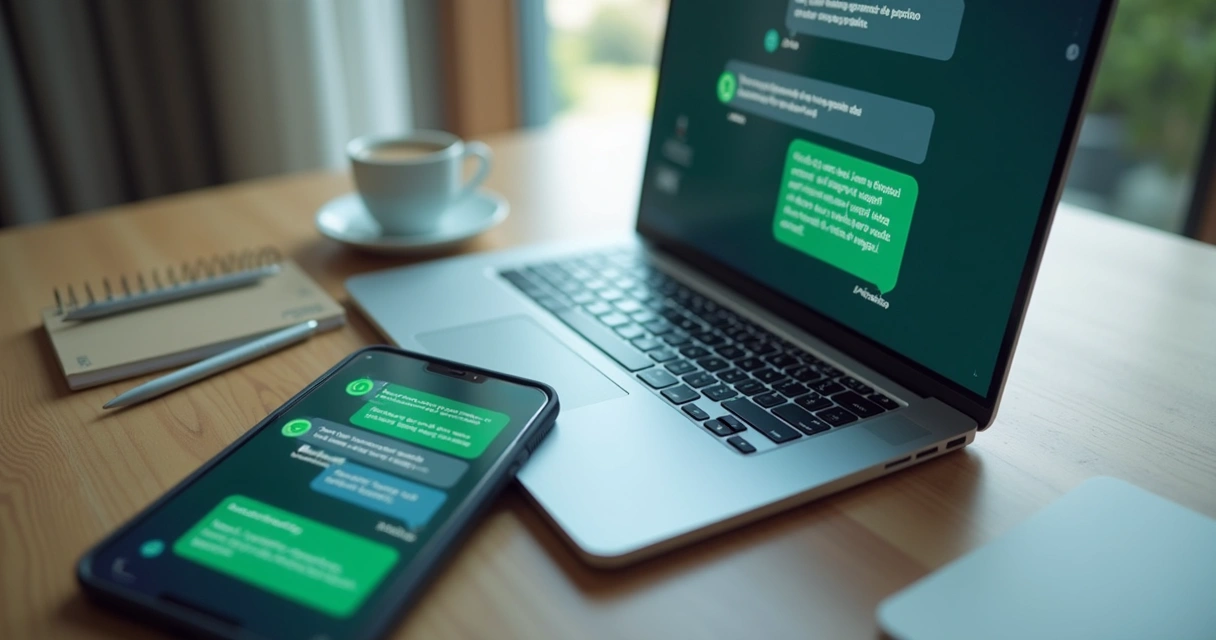
For operations that handle customer service via message, I also suggest looking at this material on integrating AI into WhatsApp customer service. I like this focus because the channel demands naturalness. Any robotic phrase appears too quickly.
Conclusion
When I think of well-aligned AI scripts, I think of coherence. The brand promises an experience, and the AI must fulfill that promise in every message. It's not enough to seem modern. It needs to sound trustworthy, clear, and close to the right audience.
I believe that companies that do this well sell better because they convey security from the first contact. And when the platform allows training the agent within the business context, qualifying leads, and transferring to humans without friction, the result tends to be more consistent. This is exactly the proposition I see in Lead2Go. If you want to understand how to apply this to your customer service and convert more opportunities with an AI that speaks like your brand, it's worth scheduling a conversation and experiencing the solution firsthand.
Frequently Asked Questions
What is brand voice?
Brand voice is how a company communicates with its audience. It appears in the chosen words, the level of formality, the message pace, and the stance adopted in sales and service.
How to align AI with brand voice?
I recommend starting with real conversations, sales materials, website, and customer service history. Then, you need to create language rules, practical examples, allowed phrases, forbidden terms, and funnel-stage-specific flows.
Why personalize AI scripts?
Because generic responses weaken trust and reduce connection with the lead. Personalized scripts make automation more natural, improve the experience, and help maintain consistency between marketing, sales, and support.
What mistakes to avoid when creating AI scripts?
I would avoid robotic language, excessive promotion, lack of context, absence of a plan for objections, and little review based on metrics. It's also a mistake not to anticipate when the conversation should be handed over to a human agent.
Is it expensive to adapt AI to brand voice?
Not always. The cost depends on the level of personalization, channels, and service volume. In many cases, adjusting the script well from the start prevents lead loss and makes the investment more worthwhile. Platforms like Lead2Go help in this process with business-oriented personalization and clear results tracking.